Danger level
 |
|  |  | |||||
|  |
|  |
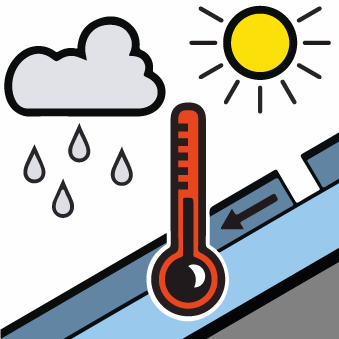
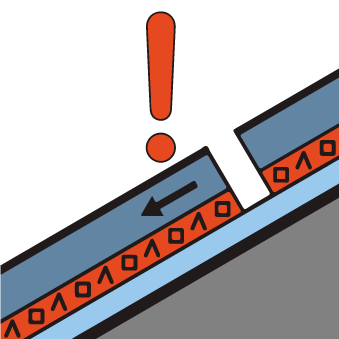

Watch out for significant warming during the day - snow will become heavier, possible spontaneous avalanches in the S sector
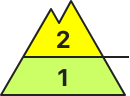
Moderate avalanche danger (2nd degree) is valid in the High and Western and western part of the Low Tatras. Snow from the last recent snowfall was blown by strong winds mainly on the southeastern slopes. Warming and inversion, which persisted since Thursday, caused significant avalanche activity. The avalanche-prone situation has stabilised slightly due to the warming of the last day and the overnight freeze. The main problem will be wet snow on S exposures, especially on steep sunny slopes. Beware, this situation will occur due to the significant warming already in the morning on the eastern slopes. On the northern side of the highest elevations there is still a permanently weak layer in the snow profile. The current situation on the ground requires good decisions, avoid steep places, watch out for a larger layer of melted snow, but also avoid places where blown snow from the last snowfall is evident and has not fallen with an avalanche in the previous days. In the event of an avalanche release, avalanches of medium to large size, even spontaneous avalanches, are a risk.
Snowpack
The weather during Monday will be influenced by a pressure high, we expect the weather to continue to be very warm and sunny. Temperatures will reach positive numbers even at the highest altitudes. A crust, or ice layer, has formed on the surface of the snowpack on the S side and will melt as the day progresses. On the S side of the mountains, if shaded areas, the snow still retains a powdery character. In the highest places (above 1800 m) on the N side of the mountains there is a permanently weak layer of square-grained snow. Sunny weather and warming will cause the snow cover to become wetter and the cohesion of the individual layers to decrease, especially as midday approaches. The snow cover remains well below average, especially at altitudes up to 1500 m above sea level.
Tendency
rising during the day, decreasing as evening approaches, weakly decreasing overall