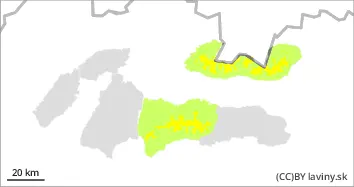
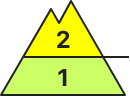
A MODERATE avalanche danger (Level 2) persists at the highest elevations
Prolonged low temperatures and a relatively thin snowpack lead to the development of critical—permanently weak—layers within the snowpack. Avalanches may be triggered, particularly by significant additional loading, though the occurrence of smaller spontaneous avalanches from fresh snow cannot be ruled out. Most of these areas are located on north-facing and shaded slopes. Locally, there may also be wind-drifted snow slabs, though these are mostly small in size.
Snowpack
During the most recent snowfall (Thursday–Friday), 10–15 cm of fresh snow fell. A continuous snow cover extends from the foothills, with significant depths found above the tree line, where it reaches 30 to 70 cm, and locally even more. Due to previous wind conditions, the snowpack is distributed very unevenly. The snow layers from individual snowfall periods are not sufficiently bonded to one another; inside, there are weak layers of angular-grained snow.
Tendency
gradually decreasing
Danger level
treeline
Avalanche Problem
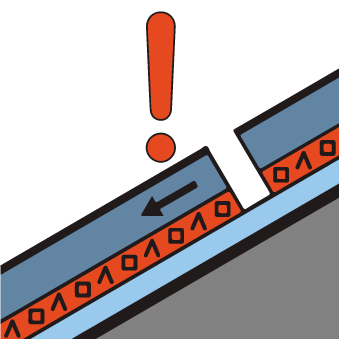
Wind slab
Treeline
Watch out for wind-drifted snow above the tree line.
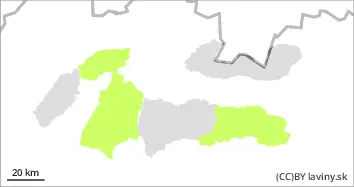
In the Fatra Mountains and the eastern part of the Low Tatras, there is a LOW avalanche danger (Level 1) above the tree line. The problem is wind-drifted snow in steep areas, where it has accumulated on top of an older snowpack. Under additional weight, small avalanches may be triggered on steep slopes.
Snowpack
During the most recent snowfall (Thursday–Friday), 10–15 cm of fresh snow fell, which in some places settled on layers of older, wind-blown snow. Within the snowpack, there are weak layers of angular-grained snow. Overall, there is 15 to 40 cm of snow in the mountains, distributed unevenly due to wind.