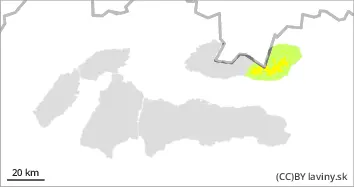
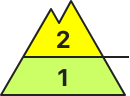
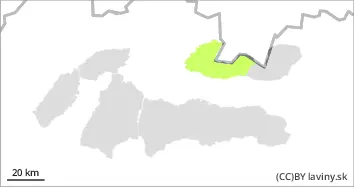
In the highest elevations of the Tatra Mountains (above 2,100 m asl), a moderate avalanche danger has developed, 2. degree!
Due to the cold snap and snowfall, 10 to 50 cm of fresh snow has accumulated. On smooth surfaces—especially grass and rock slabs—this layer of snow creates conditions conducive to avalanches, particularly under heavy mechanical stress. As temperatures rise during the day, smaller spontaneous avalanches of wet snow may also occur. The resulting snow slides and avalanches will be mostly small in scale, but in rocky, exposed terrain, they can pose a serious danger to people.
Snowpack
At elevations above 1,700 meters above sea level, up to 50 cm of new snow fell within 48 hours of the light snowfall—especially at elevations above 1,900 meters above sea level. In gullies and depressions, the depth of the new snow may be greater in some places. The new snow lies on a relatively warm base without any old snow, so its adhesion is very low. During the day, the snow will be wet on sun-exposed slopes at all elevations.
Tendency
decreasing in the coming days
Danger level
1900m
Avalanche Problem
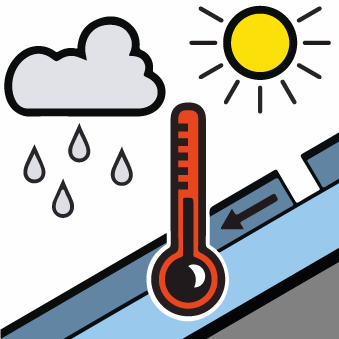
Wet snow
1900m
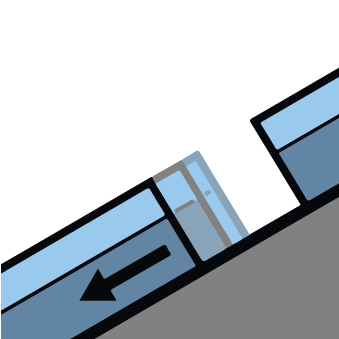
Gliding snow
1900m
In the high elevations of the Western Tatras, there is a LOW avalanche danger, Level 1.
Due to the drop in temperature and snowfall, 10 to 25 cm of fresh snow has accumulated. On smooth surfaces—especially grass and rock slabs—this layer of snow creates conditions conducive to avalanches, particularly under heavy mechanical stress. As temperatures rise during the day, smaller spontaneous avalanches of wet snow may also occur. The resulting snow slides and avalanches will be mostly small in scale, but in rocky, exposed terrain, they can pose a serious danger to people.
Snowpack
At elevations above 1,700 m above sea level, up to 25 cm of fresh snow fell within 48 hours of the light dusting—especially at elevations above 1,900 m above sea level. In gullies and hollows, the depth of new snow may be greater in some places. The new snow lies on a relatively warm base without any old snow, so its adhesion is very low. During the day, the snow will be wet on sun-exposed slopes at all elevations.