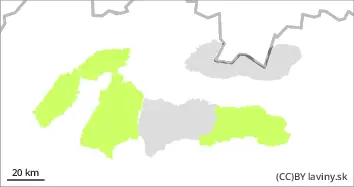
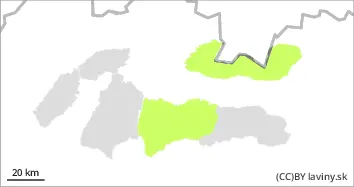
In the Fatras and the eastern part of the Low Tatras there is only a SMALL avalanche danger (1st degree of the 5-part scale). The snow cover is stabilized, the occurrence of spontaneous avalanches is not expected. On isolated steep slopes, where there is more wind-blown dry snow, smaller avalanches are possible, especially with large additional loads.
Snowpack
Snow from the last snowfall period has been blown by strong winds into the valleys, the windward sides and ridges are often blown down to the grassy base or old snow. At most altitudes, a crust or layer of hard firn has formed on the surface of the snow cover, which softens during the day on the sunlit slopes. The overall snow cover is still well below average.
Tendency
Persistent
FK
Danger level
1700m
Avalanche Problem
Wind slab
1700m
Watch out for snow pillows and slab snow on the leeward (N-SW) sides of the mountains.
In the High, Western and central part of the Low Tatras there is a SMALL avalanche danger (1st degree of the 5-part scale). With the exception of isolated slopes, especially N and NW slopes, generally a favourable avalanche situation prevails. Avalanche release is possible on very steep slopes where snow slabs and pillows are deposited, especially with high additional loads.
Snowpack
Snow from the last snowfall was blown by strong winds onto the leeward slopes or into valleys, the windward sides and ridges are often blown down to grassy or rocky ground. In most positions, a crust or layer of hard firn is formed on the surface of the snow cover. On the northern slopes, above 1700 m above sea level, there is mostly dry snow of varying quality, in places loose, but most often wind-bound in the form of snow slabs or pillows. The overall snow cover remains below average.