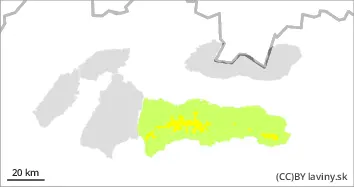
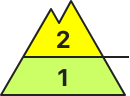
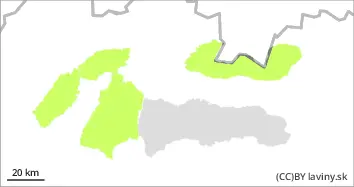
The most pronounced avalanche situation persists in the Low Tatras, where there is 60 to 100 cm of snow. Dangerous can be places where the slope changes abruptly, in narrow moguls, troughs and under rock walls. In the northern sector, the powdery nature of the snow still persists, lying on older hard ground. Great care should be taken in places where the powder surface changes to a windblown slab.
Snowpack
The snow cover consists in places of a layer of hard blown snow under which is a softer layer of felted snow. This was formed in a period when it snowed without wind influence. It is between these two layers that there was a large difference in hardness and therefore an interface along which avalanches can be triggered. In the north, in shady locations and where there was less wind influence, the snow is powdery. The total snow depth in our mountains is 10-120 cm.
Tendency
without significant change.
MB
Danger level
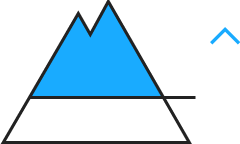
treeline
Avalanche Problem
Wind slab
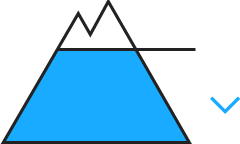
Treeline
Watch out for places with blowing snow.
In the Fatras, High and Western Tatras there is from 30 - 60 cm of snow. The avalanche danger is very local and located rather on steep troughs, gullies and places where the slope changes sharply. The greatest risk is posed by terrain traps at the end of slopes or by protruding rocks.
Snowpack
There are two distinct layers in the snow cover. Old frozen snow forms the base. The second layer is new snow from the last snowfall, in most places blown into a hard slab. These layers are gradually stabilised by planting.