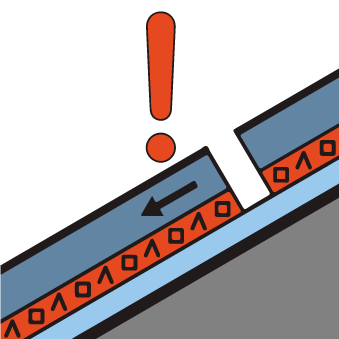
Watch out for snow slabs and pillows on steep slopes! They are prone to slides and avalanche release when loaded.
In the High, Western and Low Tatras there is a moderate avalanche danger above the forest border, 2nd degree. Snow from the last snowfall was blown onto the leeward slopes by strong winds with constantly changing direction. There are unstable snow pillows and slab snow under the ridges and in the upper parts of the couloirs, which can cause an avalanche release on steep slopes when mechanically loaded. Inside the snow cover there is a layer of square-grained snow, which manifests itself in the typical warning signals of cracking of the snow cover and whoomp sounds. Spontaneous wet avalanches may occur below 1500 m above sea level.
Snowpack
In the northern sector and at the highest altitudes, there are unstable layers of square-grained snow in the snow cover. Up to 15 cm of new snow has fallen, above 1500 m above sea level it is dry, wind-blown and unevenly distributed. The snow cover remains well below average, especially at altitudes below 1500 m.
Tendency
With snowing, it is increasing. pk
Danger level
treeline
Avalanche Problem
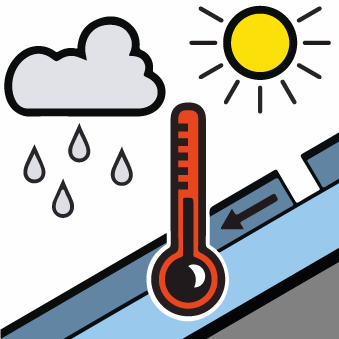
Wet snow
Treeline
Avalanche release is only possible on isolated, very steep slopes at the highest altitudes.
In the Fatras and the eastern part of the Low Tatras there is still a small avalanche danger, 1.degree. During the last snowfall, up to 10 new snow fell above the forest border, which lies on hard ground and with which it is not sufficiently bonded. Smaller avalanches can only be released exceptionally, and only on steep to very steep slopes. Their risk is mainly posed by pushing a person into exposed terrain, possibly in combination with a terrain trap.
Snowpack
The surface of the snow cover is moist to wet due to the positive temperatures. The overall snow cover is well below average, mostly below 50 cm. In gullies and moguls and on isolated slopes locally even more.